

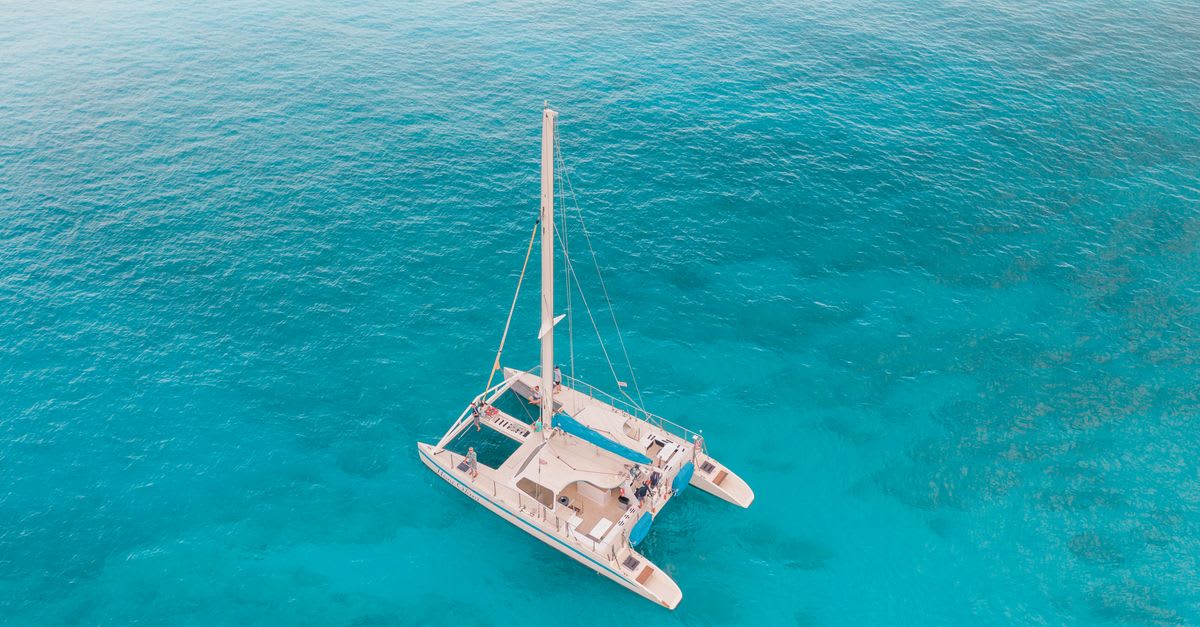
Late in the afternoon, the light over the Gulf of Papagayo turns amber. A catamaran leans gently into the breeze, the dry-forest headlands take on the color of honey, and the only sounds are canvas, water, and the low conversation of people with nowhere else to be. Then the sun meets the horizon, and the coast runs gold and turquoise.
Sailing in Guanacaste means warm water, steady seasonal breezes, and a coastline of quiet coves best reached by boat. Most visitors choose among three formats: a morning half-day sail with a snorkel stop, a sunset sailing cruise of a few hours, or a full-day voyage with paddleboarding, swimming, and lunch at anchor.
This guide is for those who approach the coast with intention rather than a checklist. It covers formats, seasons, wildlife, what to bring, and family suitability. It also belongs to a wider portrait of life on the Gold Coast.
Why Sail the Guanacaste Coast of Costa Rica
From land, the province of Guanacaste is known for its volcanoes, cattle ranches, and long, sun-bleached summers. From the water, it looks quite different. Forested headlands drop into the sea, pale beaches sit between rocky points, and small coves appear that no road reaches.
The sea here suits sailing. The seasonal Papagayo winds come from “narrow wind jets blowing from land to sea during the northern hemisphere winter,” as described in a PLOS ONE study, and they give dry-season sailors a steady, sometimes strong breeze. The water stays warm for much of the year, and the bays between Papagayo and Tamarindo offer sheltered anchorages for swimming and lunch.
If you already know the Papagayo coast from a terrace or a beach chair, a day at sea is its counterpart. It is the same coastline, seen slowly and from the water.
Sailing Tours in Guanacaste: Choosing Your Format
Tours fall into a few clear formats, and it helps to know them before you contact an operator. Most sailing tours along this coast use catamarans rather than monohulls for a practical reason. A catamaran’s twin hulls make it stable, so it heels (tilts) very little under sail. It also offers broad, shaded deck space and netting at the bow where guests can lie above the water. A monohull can feel more traditional and spirited, but it leans more and has less room for groups.
Here is how the main types of sailing tours in Guanacaste compare. All details are indicative.
Format | Typical duration | Usually includes | Cost basis | Best for |
|---|---|---|---|---|
Morning / half-day | About 4 hours | Snorkel gear, one or two swim stops, light refreshments | Per person (shared) or per vessel (private) | First-time sailors, families with young children |
Sunset | A few hours, ending after dusk | Drinks, light bites, often a swim stop before golden hour | Per person (shared) or per vessel (private) | Couples, celebrations, relaxed evenings |
Full-day | 8 hours or more | Several anchorages, snorkeling, paddleboards, lunch aboard or ashore | Usually per vessel | Confident sailors, groups who want a full day at sea |
Shared departure | Set schedule | A fixed route with other guests | Per person | Social travelers, shorter stays |
Private charter | Flexible | Your own itinerary, crew, and menu by arrangement | Per vessel | Families, multigenerational groups, privacy |
Rates, inclusions, and schedules change by season and by vessel, so confirm current details directly with the operator before you reserve.
Sunset Sailing and the Sunset Cruise in Guanacaste
A sunset catamaran cruise is the most popular way to sail along this coast. Boats usually leave in the late afternoon, anchor for a swim while the water is still bright, and then raise sail as the light turns to gold. As the sun sets, the headlands go dark against the sky and the boat makes an unhurried return in the dusk.
Most sunset tours last a few hours and serve drinks and light bites on board. The format suits couples, anniversaries, and small celebrations, as well as anyone who prefers to spend the morning ashore. As a rule of thumb, plan to depart about ninety minutes before sunset. Check the forecast that morning, since afternoon clouds in the green season can soften the colors or bring a passing shower.
Half-Day and Full-Day Catamaran Sailing
Morning sailing tends to offer calmer seas and softer light. A morning catamaran outing usually includes one snorkel stop and returns before the afternoon heat, which makes it a gentle introduction for first-time sailors.
Full-day sailing stretches the same idea. Expect secluded beaches, longer swims, time on paddleboards, and a lunch that is allowed to take its time. It suits guests who want a whole day at sea and do not mind a few hours of sun and salt air.
Shared Departures vs Private Charters
A shared catamaran tour is a social, simple choice: a fixed route, a set departure, and fellow guests on deck. A private catamaran changes the day entirely. The itinerary, the pace, the menu, and the company are all yours, and the crew can change course to follow the wind or a quieter anchorage.
Private sailing deserves its own guide. For vessel types, crewed options, and planning details, see this guide to private yacht charter along Guanacaste’s Gold Coast.
Where can I charter a yacht in Costa Rica?
Guanacaste’s Gold Coast is one of the country’s main charter regions, with departures from Marina Flamingo, the Gulf of Papagayo, and nearby beaches. Options range from crewed catamarans to motor yachts.
Ocean Adventures in Guanacaste: What You Will Do on the Water
The finest days at sea are composed rather than scheduled. Most catamaran charters combine sailing along the coast with time in and on the water, and the mix can be adjusted to the mood of the group.
Snorkeling in Guanacaste
Snorkeling here usually means rocky reefs and boulder-strewn coves rather than wide coral gardens. These waters often hold schools of reef fish, rays resting on the sand, moray eels, and sometimes sea turtles. Snorkel gear is almost always provided, and crew members usually choose a sheltered site on the day.
Conditions change with the seasons. A local dive operator notes that in the dry season “the water can be a fair bit cooler,” with visibility on average lower than in the green season, according to Rocket Frog Divers. Many of these coves lie just off sands worth knowing from the shore as well, and a curated guide to the best beaches in Guanacaste shows how the coastline looks from land.
Paddleboarding in Guanacaste, Costa Rica
Many catamarans carry stand-up paddleboards or kayaks, which guests use once the boat is anchored in a calm bay. Paddling over clear water, close to the rocks and the edge of the forest, is one of the quietest pleasures of the day. It suits confident swimmers of most ages, and beginners usually find their balance within minutes on flat water.
Stay in the shelter of the bay rather than heading toward open water, and wear a life jacket if the crew suggests one. The sun is stronger on the water than it feels, so a hat and a long-sleeved rash guard are sensible.
Manta Ray Encounters in Guanacaste
Few sights at sea rival a manta ray gliding through blue water. In this region, encounters are mainly a diving experience centered on the offshore islands. The Gulf of Papagayo is home to Pacific manta rays, which “gather around the Catalinas Islands between December and March,” according to Original Diving.
Sightings are seasonal and never assured. Within the gulf itself, local divers at Rocket Frog Divers describe mantas as an occasional and uncommon sight, and point to the Catalinas and the Bat Islands as the better places to look. If you see one, watch quietly, keep your distance, and never touch it. Those drawn further offshore may also consider deep sea fishing in Costa Rica.
Whale Watching in Guanacaste
Humpback whales visit Costa Rica’s Pacific coast in two migrations, and the steady deck of a catamaran is a good vantage point if they appear. Dolphins and sea turtles are often seen along the way. The truth is that the largest numbers of whales gather on the southern Pacific coast. A month-by-month guide from Bill Beard Costa Rica rates the north as having only “some” sightings in the northern-population months. In Guanacaste, a whale is best treated as a gift rather than an expectation.
Responsible crews hold back from wildlife and never chase it. NOAA Fisheries guidance advises observing “dolphins, porpoises, and seals from a safe distance of at least 50 yards (150 feet) by land or sea” and large whales from at least 100 yards. It is a sensible standard on any water.

Best Time to Sail: Seasons, Weather, and Wildlife
Like much of the Costa Rican Pacific, Guanacaste has two seasons. December through April is the dry season. May through November is the green season. The dry months bring clear skies and reliable sunsets. In northern Guanacaste, they are also the windiest, since the Papagayo winds blow mainly during the northern winter.
Under the surface, the dry season brings upwelling, the rise of cooler, nutrient-rich water from depth. Peer-reviewed research in PLOS ONE describes this process as bringing cold, nutrient-rich water to the surface in the Gulf of Papagayo roughly between November and April. That is why the water can feel cool and look less clear early in the year.
Season | Sea and weather | Possible wildlife (never guaranteed) | Suits |
|---|---|---|---|
December to April (dry) | Clear skies, steady breezes, cooler water, gustier afternoons | Northern humpbacks, manta rays near the offshore islands, dolphins | Sunset sailing, confident sailors, those who want reliable sunshine |
May to June (early green) | Warmer, clearer water, occasional afternoon showers | Dolphins, sea turtles, reef life | Snorkelers, quieter travel |
July to November (green) | Lush coastline, calmer mornings, afternoon rain more likely | Southern humpbacks, dolphins, sea turtles | Morning sails, those who value solitude |
Where to Depart: Flamingo, Papagayo, Tamarindo, and Conchal
Your departure point shapes the character of the day. Boats from the Gulf of Papagayo explore a deep, sheltered gulf with many anchorages. Departures further south from Flamingo, Conchal, and Tamarindo sail along the open Pacific coast, where the views are broad and the islands are close.
Flamingo: Marina Flamingo is a convenient base for catamaran sailing and offshore days, with easy access to the Catalinas.
Gulf of Papagayo: Protected bays and resort marinas further north, worth the longer transfer for guests who want calm anchorages.
Conchal and Brasilito: Beach departures near soft, shell-strewn sand, often suited to sunset tours.
Tamarindo: A lively town with many sunset departures, often from the beach. Evenings ashore can continue with fine dining and beach clubs in Tamarindo.
Ask whether the transfer is included and whether boarding from the beach involves a short wade. Ocean days pair well with time inland. For volcanic landscapes and hot springs, consider day trips from Cantomar.
When is the best time for sunset sailing in Guanacaste?
The dry season, from December to April, offers the clearest skies and the most reliable sunsets. Sunset sails also run during the green season, when afternoon clouds can add color but sometimes bring showers. Whatever the month, plan to depart about ninety minutes before sunset and check the forecast that day.
What to Bring and What Is Usually Included
Most tours supply the essentials, so you can pack lightly. A short, considered bag is enough for a day under sail.
What to bring:
Reef-safe mineral sunscreen
A light layer or linen shirt for the evening breeze
Polarized sunglasses and a secure hat
Swimwear and a rash guard
A towel, if the operator does not provide one
A waterproof phone case
Any personal medication
Usually provided:
Snorkel masks, fins, and life jackets
Paddleboards or kayaks on many vessels
Water, soft drinks, and refreshments
An experienced captain and crew
If you are prone to seasickness, eating a light breakfast, sitting near the middle of the boat, and keeping your eyes on the horizon can all help. Some travelers find ginger soothing. Ask a pharmacist or physician about remedies before you travel.
Sailing with Family: Is It Suitable for Children?
A catamaran is one of the most comfortable vessels for younger guests. It barely heels, it has shaded seating, and the netting at the bow tends to become a favorite spot. Reputable crews keep child-sized life jackets on board, but it is wise to confirm sizes ahead of time.
For families with young children, a morning half-day or sunset tour is usually the most comfortable choice. These sails are long enough to feel like an adventure and short enough to end before anyone tires. Multigenerational groups often prefer a private charter, where meal times, swim stops, and the pace of the day can suit everyone. Age policies vary, so confirm them with the operator.
How to Choose a Sailing Operator in Guanacaste
A good sailing experience depends on the people running it. The Costa Rica Tourism Board advises travelers to “make sure that they have ICT certifications and/or the necessary operating permits.” The board’s tour operator directory lists companies evaluated against ICT regulations. The Certificate of Sustainable Tourism also recognizes operators with strong environmental practices. A discerning traveler might weigh the following:
ICT declaration, permits, and insurance
Captain and crew experience, including first-aid training
Vessel size, condition, and safety equipment
Maximum group size on shared departures
Recent, detailed guest reviews
Clear policies on weather and cancellations
Responsible wildlife practices
Is whale watching available from a sailing catamaran?
Humpback whales may be seen from a catamaran during their migration seasons, roughly December to March and July to October. Sightings in Guanacaste are less frequent than on the southern Pacific coast and are never guaranteed. Responsible crews keep a respectful distance and never pursue whales.
Explore Ocean Club Living and Private Boating at Cantomar Ocean Club
After a day at sea, the place you return to matters as much as the sail. Cantomar Ocean Club fronts Playa Punta Pelencho at the north end of the beach, a few minutes south of Playa Flamingo and Marina Flamingo. The marina is where many departures begin and where private fishing and boating tours can be arranged.
For those who want the Papagayo coast to be part of everyday life, Cantomar offers a members-only Ocean Club with beach concierge and water sport rentals, wellness and fitness facilities, and a private Ocean Club restaurant. It is a home base for days like these, and it pairs naturally with wellness retreats in Costa Rica. It is also a place to learn what pura vida means on this coast.
To explore the Ocean Club, its nearness to the marina, and the beachfront homes around it, visit cantomar.com, reach the team through the contact page, or call +1 720 803 1683.

